
PUBG Battlegrounds: Unpacking the Performance Gap Between PS5 and Xbox Series X|S










Popular Now
 BeamNG.drive
 The Legend of Zelda
 Auto X Drift Racing 3
 Geometry Dash
 Genshin Impact
 Grand Theft Auto V
 Black Myth: Wukong
Among Us
Black Myth: Wukong
Among Us
 CarX Street
 FIFA 23
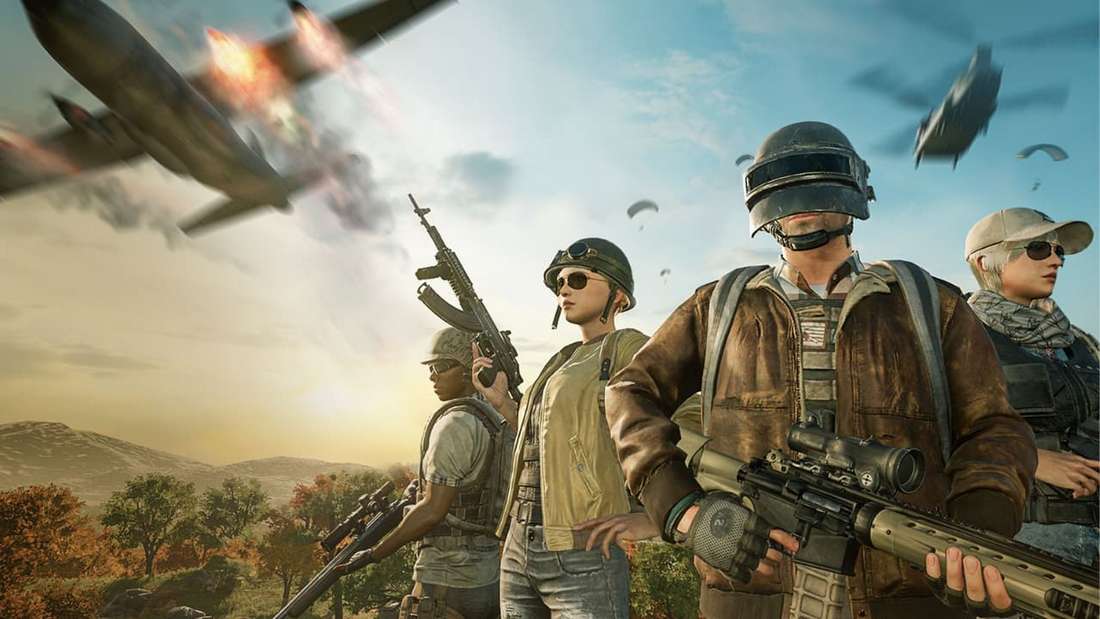 In the fiercely competitive world of battle royale games, performance is paramount. Every frame, every millisecond of load time, and every visual detail can significantly impact a player’s experience and competitive edge. For many fans of PUBG: Battlegrounds, a long-standing and critical discussion revolves around the disparity in performance between the PlayStation 5 and Xbox Series X|S versions of the game. While both consoles boast powerful next-generation hardware, a persistent narrative suggests that the Xbox iteration consistently delivers a superior, more optimized experience. This article delves into the technical nuances, player feedback, and potential reasons behind this performance gap, providing a comprehensive analysis for gamers and enthusiasts looking for the optimal PUBG experience.
The Core Discrepancy: Frame Rates and Resolution Targets
The bedrock of a smooth gaming experience lies in its frame rate stability. For a fast-paced shooter like PUBG, maintaining a consistent 60 frames per second (FPS) is crucial for responsiveness and fluidity. Historically, the PlayStation 5 version of PUBG has struggled more consistently to hit and maintain this target compared to its Xbox Series X|S counterpart. While both consoles run the game via backward compatibility with their last-gen versions (PS4 Pro and Xbox One X respectively), the next-gen enhancements were expected to iron out these inconsistencies.
- Xbox Series X: Players typically report the game holding a more stable 60 FPS, often reaching higher peak resolutions and maintaining visual fidelity even during intense firefights or crowded environments. The Xbox Series X performance is frequently cited as the benchmark.
- PlayStation 5: Despite its powerful hardware, the PS5 version has been observed to suffer from more frequent and noticeable frame rate drops, particularly in demanding areas like Erangel’s Mylta Power or Sanhok’s Paradise Resort. These drops can dip significantly below 60 FPS, leading to a less smooth and potentially frustrating experience, especially in competitive online gaming scenarios.
Resolution, while perhaps less critical than frame rate in a fast-paced shooter, also plays a role in visual clarity. The Xbox Series X often manages to render PUBG closer to a native 4K resolution, or at least a higher dynamic resolution, contributing to sharper image quality. The PS5, conversely, sometimes struggles to match this, leading to a slightly softer image in comparison. This difference, though subtle, can be noticeable to players with high-end displays seeking the best possible graphics.
 Load Times and In-Game Performance: A Deeper Dive
Beyond raw frame rates, load times and general in-game performance elements like texture streaming and draw distance contribute significantly to overall polish. Both next-gen consoles feature blazing-fast SSDs, promising to drastically cut down on waiting times. However, even here, subtle differences can emerge.
- Faster Loading: Both consoles offer significantly reduced loading times compared to their last-gen predecessors. Dropping into matches, loading assets, and respawning in modes like Team Deathmatch are much quicker, improving the overall flow of gameplay.
- Texture Pop-In: While largely improved on both platforms, some players report that texture pop-in, where high-resolution textures load noticeably late, can still be more prevalent or jarring on the PS5. This can momentarily detract from immersion and visual consistency.
- Draw Distance and Asset Streaming: The ability of the game engine to render distant objects and stream in complex environmental assets without hitching is crucial in a battle royale game where spotting enemies from afar is key. The Xbox Series X appears to handle these elements with slightly more grace, leading to a perception of a more robust and consistent environment. This is vital for players who invest in a high-fidelity gaming setup.
These seemingly minor technical details accumulate to create a general feeling of polish. A game that loads quickly, maintains a steady frame rate, and renders its world flawlessly contributes to a more engaging and less frustrating player experience, making the gaming console comparison a frequent topic among enthusiasts.
Visual Fidelity and Graphical Settings: A Question of Parity
While PUBG isn’t celebrated for groundbreaking graphics, its tactical gameplay benefits from clear visual information. Differences in graphical settings between consoles, even if minor, can affect gameplay perception. Elements like shadow quality, anti-aliasing, and the rendering of particle effects might be subtly tweaked between platforms to achieve a desired performance target.
Reports suggest that the Xbox Series X version tends to maintain slightly higher graphical settings more consistently without sacrificing frame rate. This can manifest in more detailed shadows, less aliasing on distant objects, and potentially more refined environmental effects. While these aren’t game-breaking differences, they contribute to the perception that the Xbox version offers a more visually complete package for battle royale performance.
It’s important to note that PUBG Corporation (now Krafton) has consistently worked on PUBG updates and optimizations for all platforms. However, the foundational optimization for the PS4 Pro version, which the PS5 primarily runs, may not have been as robust as that for the Xbox One X, which the Xbox Series X|S inherits. This initial difference could be a significant factor in the continuing disparity.
Why the Disparity? Unpacking the Optimization Challenge
Understanding why such a performance gap exists, especially given the raw power of the PS5, requires considering several factors:
- Backward Compatibility Layer: Both consoles are running the last-generation versions of PUBG, albeit with next-gen enhancements. The way these backward compatibility layers interact with the game engine and how developers implement optimizations can vary significantly between Sony and Microsoft’s ecosystems.
- Developer Focus and SDKs: It’s possible that at different points in development, the PUBG team found certain optimizations easier or more effective on one platform over another. The Software Development Kits (SDKs) and development tools provided by each console manufacturer can also influence how efficiently a game can be optimized.
- PS4 Pro vs. Xbox One X Base: The Xbox One X was often lauded for its ‘true 4K’ capabilities and was seen as a more powerful console than the PS4 Pro during the last generation. If the base game’s optimization was already stronger on the Xbox One X, the Series X|S simply built upon a more solid foundation. The PS5, inheriting the PS4 Pro version, might have started from a slightly less optimized baseline. This impacts gaming hardware analysis.
- Dynamic Resolution Scaling: Both versions likely employ dynamic resolution scaling to maintain frame rates. The PS5 might be forced to drop its resolution more aggressively or more frequently than the Xbox Series X|S to maintain playable frame rates, leading to a less consistent visual experience.
These factors combine to create a challenging environment for achieving absolute cross-platform parity, especially for a game that began its life on less powerful hardware and has undergone numerous engine updates and content additions over the years.
 Impact on Competitive Play and Player Experience
For casual players, minor frame rate dips might be an annoyance. However, for those engaged in competitive PUBG gaming, these discrepancies can translate directly into a disadvantage. A smoother frame rate means better reaction times, more precise aiming, and a clearer view of the action. When split-second decisions and pixel-perfect shots determine victory, even a slight performance lead can feel substantial.
Furthermore, the overall consistency contributes to immersion. A stable frame rate and crisp visuals allow players to focus on the game’s tactical depth rather than being distracted by technical hitches. The search for the best console for PUBG often boils down to which platform offers the most reliable and consistent performance.
The Road Ahead: Potential for PS5 Improvements
While the performance gap has been a consistent topic, it’s not immutable. Game developers continuously release patches and optimizations. Krafton has shown a commitment to improving PUBG across all platforms, and future updates could potentially bring the PS5 version closer to parity with the Xbox Series X|S. Dedicated next-gen versions, rather than relying on backward compatibility, would be the ideal solution, allowing the game to fully leverage the raw power of both consoles without the limitations of their predecessors.
Players on PS5 continue to hope for a comprehensive update that addresses these long-standing issues, potentially unlocking the console’s full potential for PUBG. The community frequently engages with developers, providing feedback and highlighting areas for improvement, underscoring the demand for game optimization.
Conclusion: Making an Informed Choice
For players prioritizing the absolute best technical performance in PUBG: Battlegrounds, the Xbox Series X currently appears to hold an edge over the PlayStation 5. While both consoles deliver a significantly improved experience over last-gen versions, the Xbox Series X consistently offers more stable frame rates, potentially higher resolutions, and a generally smoother overall presentation. This makes it a strong contender for those seeking the best PUBG experience available on console.
However, the differences, while noticeable to discerning players, may not be deal-breakers for everyone. Many PS5 players still enjoy PUBG immensely, and ongoing PUBG updates could narrow the gap. Ultimately, the choice between platforms depends on individual priorities, but an informed understanding of these performance disparities is crucial for any serious battle royale enthusiast investing in a next-generation console for this iconic title.